Oceana County Coastal Restoration Efforts
Great Lakes Restoration Initiative
The Great Lakes Restoration Initiative Project enhanced resilience and connectivity of vulnerable forestland through a combination of reforestation, invasive species management, and K-12 place-based stewardship learning. The two project sites were located in Benona Township connecting Lake Michigan to upper Stony Creek in a 400-acre area. To connect this forestland, Oceana Conservation District, The Tree Lab, Oceana County Community Schools, American Youth Foundation - Camp Miniwanca (AYF), and a variety of local partners planted 22,100 trees to support 75 acres of Hemlock Woolly Adelgid treatments and Autumn Olive treatments completed by Muskegon Conservation District and Black River Habitats. Over 2,000 students in CEJEST identified disadvantaged communities were engaged in STEM programming to inspire the next generation of stewards. This project was funded through the U.S. Forest Service: Great Lakes Restoration Initiative.
Our Projects Journey & Impact
summer 2024
We hit the ground running in summer 2024 with planning site preparation and planting, stakeholder and community outreach, site testing for seedling survival using a variety of planting and caging methods, and the piloting of The Tree Lab.


summer & fall 2025
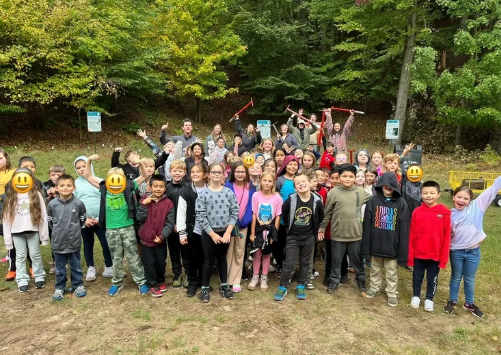
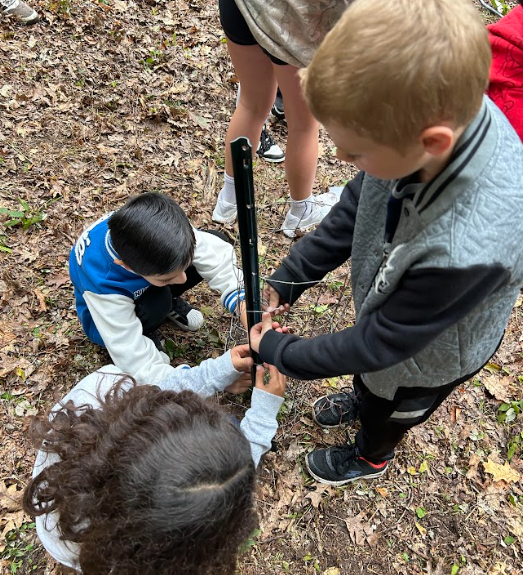
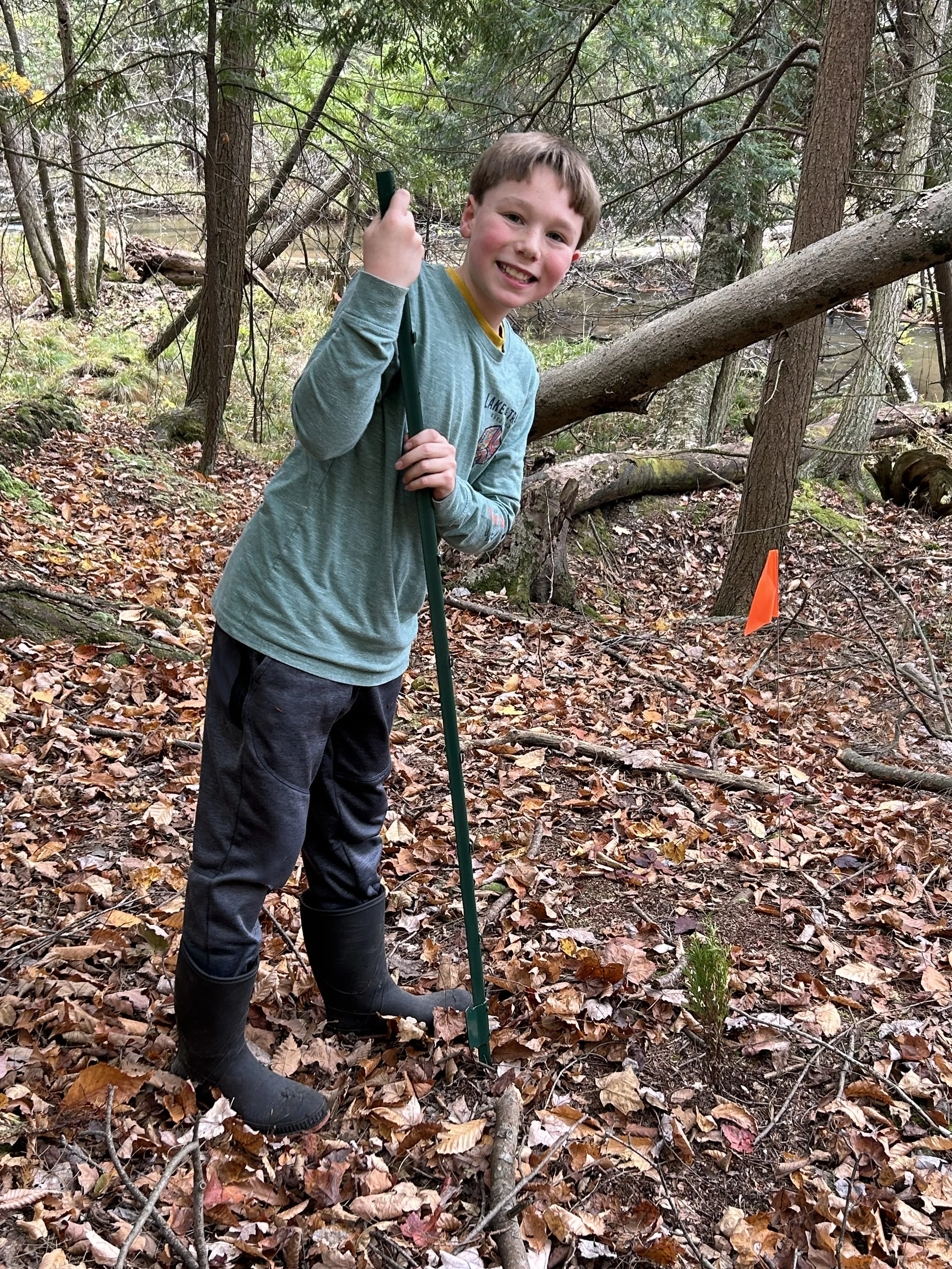
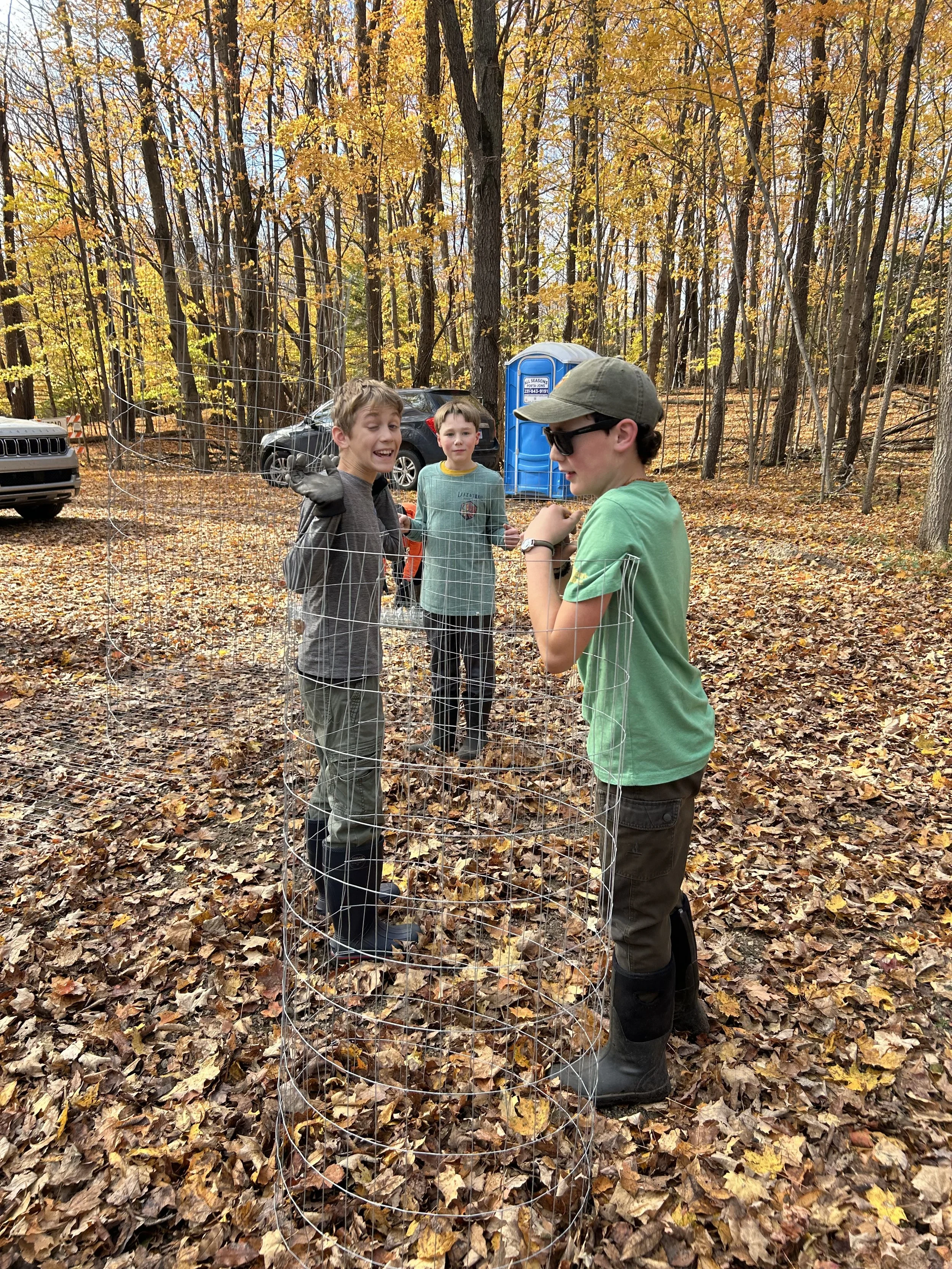
This summer 100 Eastern White Cedars were planted at Stony Creek Nature Preserve and an additional 8,300 White Pines, Concolor Fir, and White Spruce were planted at Camp Miniwanca. In addition to our planting initiatives, we engaged over 1,143 K-12 students in hands-on STEM education, empowering the next generation of environmental stewards. In the fall, we installed a total of 2,500 White Pine and White Spruce seedlings across sensitive and critical dune habitat along the Lake Michigan shoreline. In addition to our planting, we engaged an additional 377 students. Efforts to protect previous plantings continued with the application of tree protection to the 100 Eastern White Cedar trees that were planted at Stony Creek Nature Preserve earlier this summer. This installation of tree cages was essential for safeguarding the young seedlings from potential damage and browsing caused by local wildlife.
spring & Fall 2026
Our reforestation and education initiatives have reached milestones. In the spring, we officially reached our goal of planting 20,000 tree seedlings at Camp Miniwanca to restore critical dune habitats along Lake Michigan. The variety of seedlings planted were White Pine, Balsam Fir, White Spruce, and Eastern White Cedar totaling 9,100 planted. Eastern White Cedars were planted and caged in critical riparian habitat along Stony Creek. Complementing these efforts, The Tree Lab and partners engaged a total of 190 K-12 students. This allowed for hands-on STEM career training and an opportunity for staff to empower the next generation of environmental stewards. After reaching the goal of 20,000 trees planted along Lake Michigan and Stony Creek, we conducted a 10% replacement planting of 2,100 tree seedlings in the fall. The trees planted were Eastern White Cedars at both Stony Creek Nature Preserve and Camp Miniwanca and White Spruce seedlings at Camp Miniwanca.


Our Why & How:
Oceana County is a historically an underfunded and underserved community that houses invaluable biodiversity and natural resources. The counties 25 miles of Lake Michigan coastline is our first line of defense in the conservation of soils, water, and important ecological habitat. As climate change increases, invasive species and other stressors continue to threaten the health of our forests, therefore, innovative reforestation solutions were needed.
The greatest threat to our coastal habitat is the decimation of our Eastern Hemlock population, a keystone species in Michigan’s forests. An invasive insect, Hemlock Woolly Adelgid, extracts sap from hemlock trees causing needles and buds to die. Over time, canopies thin, trees take on a grayish appearance and growth slows. Without treatment, infested trees die within four to ten years. Current treatment methods use insecticides (imidacloprid or dinotefuran) to successfully eradicate hemlock woolly adelgid from infested trees, however retreatment is necessary every 4-7 years to prevent reinfestation. These temporary treatments are costly and require specialized equipment, labor, and knowledge. With 170 million hemlocks in Michigan, the demand for treatment severely outweighs the state’s available resources. It was clear to us that a sustainable solution to this problem need to be addressed. This is why our project’s structure was three-fold: support treatment of invasives to protect pockets of surviving hemlock, reforest open canopy areas with species that provide similar wildlife and stabilization benefits, and finally provide educational opportunities to inspire and actively engage the next generation of conservation stewards.
We were able to take this project in steps. Our neighbors at Muskegon Conservation District prepared our site at Stony Creek Nature Preserve and treated hemlocks at Camp Miniwanca with insecticide. Following that, we reforested with a variety of species like White Pine, White Cedar, Balsam Fir, Concolor Fir, and White Spruce to succumb to HWA infestations. This was able to diversify our forests, increase resiliency, and decrease the chance of HWA reinfestations. Finally, this project would not have been holistic if we did not think about the bigger picture - the future of conservation. We were able to engage 4 different school districts within Oceana County through The Tree Lab at Camp Miniwanca.
Get connected:
If you need assistance on how to start reforestation on your property due to hemlock loss or have an HWA infestation on your property, please email Stewardship Coordinator, Emma Waatti at emma.waatti@macd.org or call our office at (231)861-5600.
Accomplishments (2024-2026):
Reforested our sites by planting a variety of 22,100 tree seedings
Treated roughly 75 acres of Hemlock trees at Camp Miniwanca
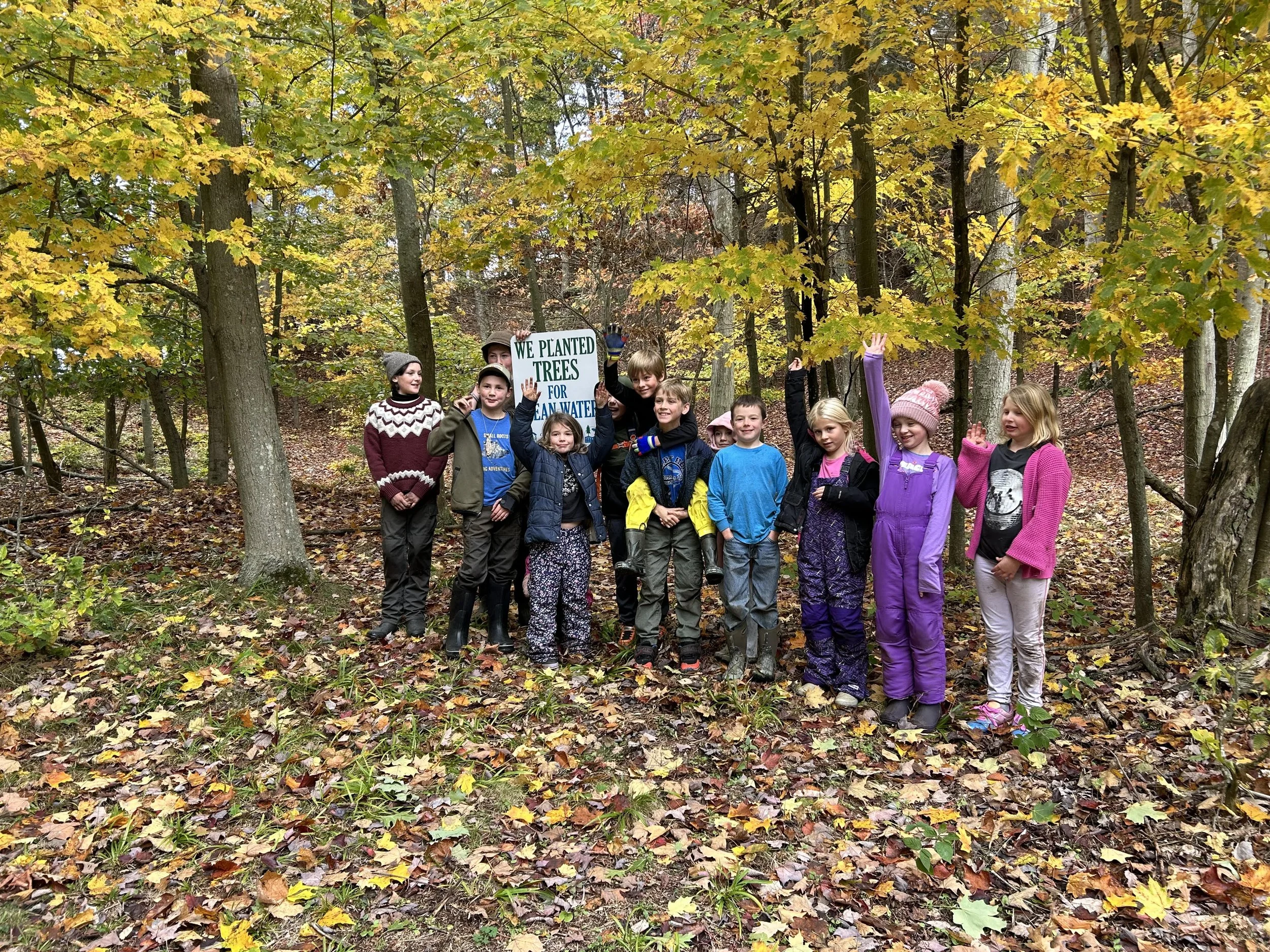
Engaged over 2,000 K-12 students in STEM education about forestry, reforestation, and tree species
-
The Tree Lab: mobile STEM education place-based learning experience
The Tree Lab is an unforgettable tree-science and reforestation experience designed for students, teachers, and community organizations of all sizes. The Tree Lab is a place-based, STEM education adventure, where participants gain firsthand career training in agriculture, forestry, natural resources, and ecosystem restoration.
The Tree Lab works in K12 schools, public parks, private forests, and natural communities:
The Tree Lab is comprised of 6 experiential tree science adventures:
Timber Technology
The Nursery School
The Agroforestry Command Center
The Tree Planting Experience
-
Oceana County Public Schools
Michigan Department of Natural Resources
Muskegon Conservation District
Coulter Farms
West Michigan Cooperative Invasive Species Management Area
Camp Miniwanca - American Youth Foundation
The Tree Lab
Black River Habitats